

KEEP THE EDGE. DROP THE ROCK.
How do I keep everything that made me exceptional while letting go of everything that nearly destroyed me?
You got sober. Now what?
That was the hard part. The Room is built for the chapter nobody prepares you for not therapy, not a support group, not another meeting. It is a private room where successful people who have done the hard work sit down together and rebuild identity, leadership, relationships, and legacy on their own terms.
The Friction Model
High performers know one move: add fuel. Work harder. Focus more. Optimize. And it works until it doesn't. Until the weight you're carrying exceeds the horsepower in the engine. At that point, pushing harder doesn't work. You need to identify the friction.
Addiction is not a performance problem. It is a friction problem. And you cannot out-fuel friction. You can only remove it.
Same engine. Lighter load. New direction. You don't have to choose between being formidable and being whole.
The Four Pillars
Each pillar is covered across two sessions: define the friction, live with it for a week, return and review what happened. Not lectures. Lenses.
Leadership. The friction is leading through fear, manipulation, or the persona you built while drinking. You are no longer that person. Authority earned through trust, not fear.
Relationships. The friction is most of your relationships were built around a person who no longer exists. Repair, rebuild, reconnect the ones that need your presence more than your performance.
Role. The friction is who you are versus what you do. Addiction hides inside roles. The role can change or vanish. You do not. Who are you without the title?
Legacy. The friction is misalignment between your actions and what you actually want to build. You stop burning the thing you are building.
This is not soft work. This is performance architecture. You remove the weight that was never supposed to be there.
How It Works
We establish community and build together across 8 live virtual sessions, 75 minutes each, meeting weekly
Each pillar covered over two sessions a methodology, not a lecture series
Real work-and-life application, problem solving, and a private group community channel
Access limited to 12 members per room exclusivity by design
Open to leaders in recovery with at least one year of continuous sobriety and a willingness to change
Peer-led by Chad Johnson, founder of Lymbic Collective
Beyond the Cohort: The Collective
The cohort is the front door. Members who complete The Room join an ongoing community lifelong accountability, an executive peer network, and service. This lasting fellowship establishes your place in the community.
The Code
Show up. Bring your truth. Leave your ego. Be teachable. Be accountable. Give it back. What you hear here stays here.
Don't wait for a seat at the table. Build the table.

LEADERSHIP
The version of you that led while you were drinking is gone. The question is whether you've caught up to the one who replaced him.
Sober leadership is a different animal. You feel everything. You can't numb the hard conversation or charm your way past the thing you should have handled weeks ago. But you also see clearly, you remember what was said, and you're finally in the room. This pillar is about leading with clarity instead of a crutch — authority earned through trust, not fear.
The Four Pillars
Every cohort moves through four pillars. Not as lectures — as lenses. We define each one together, you apply it in your real life for a week, and we come back to look at what actually happened.
Define it. Live it. Review it.

RELATIONSHIPS
Sobriety changes every relationship you have. Most of them were built around a version of you that no longer exists — and when you change, those relationships have to change too, or they break.
Marriage. Family. Business partnerships. Friendships built on the bar and the bottle. This pillar is about renegotiating the relationships worth keeping, releasing the ones that were only ever transactional, and building new ones that fit the person you've become. Some of the hardest, most honest conversations of your life are on the other side of getting sober. This is where you learn to have them.

ROLE
Who are you now? Not who you were in your drinking career. Not who you're trying to become. Who are you today — as a professional, a partner, a parent, a person?
Addiction hides inside roles. The provider. The successful one. The one who's got it handled. You can perform a role flawlessly while the person underneath it is falling apart. This pillar separates the two. Your role is what you do — it can change, end, or be taken away. Who you are doesn't. We get honest about the gap between the role you're performing and the one that actually fits.
LEGACY
Legacy is the long game — the conversation high performers are already having privately. What am I actually building? What will my name mean? What do I leave behind?
Sobriety rewires that question. You stop burning the thing you're building. You get present enough to construct something that lasts longer than you do. This pillar is about defining your legacy on your own terms — not the number on the balance sheet, not what your industry expects, not what your drinking self dreamed about. The balance sheet dies with you. What you build in other people doesn't.
1:1 Intensives
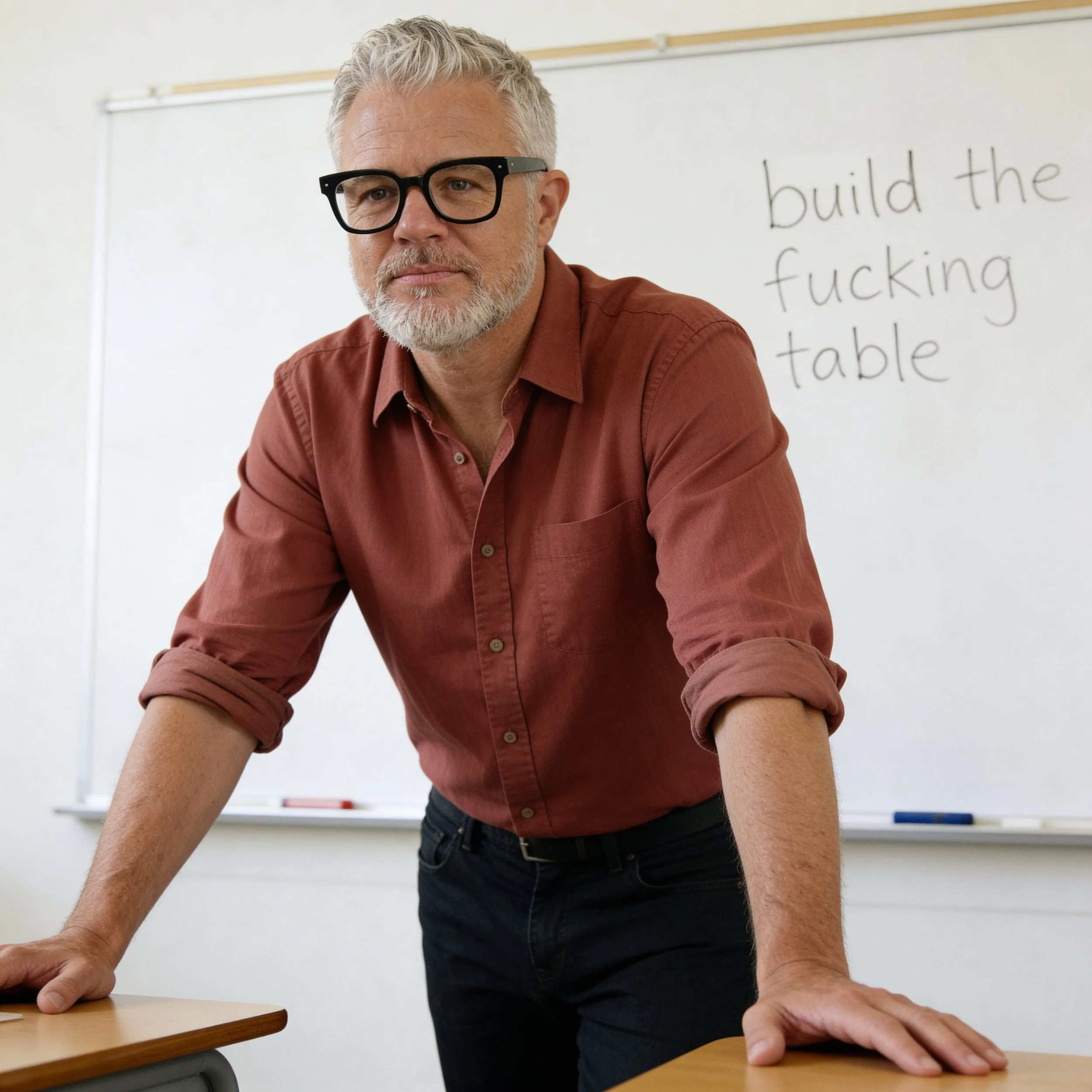
Private work with Chad. For when you need to get to the bottom of it.
The Room is a cohort. This is the opposite — it's just you, and the one thing that's been sitting on your chest.
Sometimes you don't need a room. You need a focused, private, no-bullshit conversation with someone who's been where you are and won't let you perform your way around the real issue.
These aren't limited to the four pillars. They start wherever you are. The decision you keep circling and won't make. The relationship that's quietly eating at you. The career move you can't tell if you're brave enough or scared enough to make. The thing you can't say out loud to your team, your board, or your spouse — because at the top, the circle of people you can be honest with disappears.
That's the gap an intensive fills.
How it works:
Every intensive is built around you — your situation, your stakes, your timeline. We start with what's actually bugging you, not a curriculum. We get underneath it. And you leave with clarity and a next step, not a stack of homework and a vague feeling of having talked.
This is for people who don't have time to circle the runway. You bring the thing. We get to the bottom of it. You move.
Start with a conversation →